Aggregate and Crushing Equipment Glossary
The heavy equipment industry uses specialized terminology that can be confusing for new buyers and operators. This glossary covers the most common terms you'll encounter when buying, operating, or maintaining crushing, screening, and processing equipment.
A
- Abrasion Index (Ai) — A measure of how abrasive a rock type is. Higher Ai means faster wear on crusher components. Granite and quartzite have high Ai; limestone has low Ai.
- Aggregate — Crushed stone, gravel, sand, or recycled materials used in construction. Classified by size and gradation.
- Apron Feeder — A heavy-duty feeder using chain-driven steel plates to move material. Used for very large or heavy feed applications.
B
- Blow Bar — The wear component on an impact crusher rotor that strikes material. Made from high-chrome steel, martensitic steel, or ceramic composites.
- Bridging — When oversized material jams in the crusher's feed opening. Requires clearing before the crusher can resume. Proper feeder control prevents bridging.
- Bypass — Material that passes around or through the crusher without being crushed. Usually fines that are already smaller than the crusher's output size.
C
- Choke Feed — Operating a crusher with a full crushing chamber at all times. Produces a more consistent product and distributes wear evenly. The preferred operating mode for most crushers.
- Closed Side Setting (CSS) — The minimum gap between crushing surfaces at their closest point. Determines the maximum output size.
- Concave — The stationary outer wear liner in a cone crusher. Also called the bowl liner.
- Cone Crusher — A crusher that uses a rotating mantle inside a concave to compress material. Used for secondary and tertiary crushing to produce cubical aggregate.
- Conveyor — A belt system for transporting material between processing stages or to stockpiles.
- Crusher Run — The unscreened output from a crusher. Contains a mix of all sizes from fines to the CSS setting.
D
- DEF (Diesel Exhaust Fluid) — Urea-based solution injected into Tier 4 Final engine exhaust to reduce NOx emissions.
- DPF (Diesel Particulate Filter) — Exhaust filter on Tier 4 engines that captures soot. Requires periodic regeneration (burn-off).
- Deck — A single screening surface on a vibrating screen. A 3-deck screen has three layers that produce four product sizes.
- Discharge Conveyor — The conveyor that carries finished product away from the crusher or screener.
F
- Feed Opening — The maximum size of the crusher's intake. Measured as width x depth (e.g., 42" x 30" jaw opening).
- Fines — The smallest material produced by crushing or screening. Usually refers to material passing through the bottom deck of a screen.
- Final Drive — The gearbox at each track that converts hydraulic motor rotation into track movement. A common wear item on tracked equipment.
G
- Gradation — The distribution of particle sizes in a material sample. Measured by passing material through a series of progressively smaller sieves.
- Grizzly — A set of parallel bars used for rough pre-screening. Removes fines before the crusher. Usually part of a grizzly feeder.
H
- Horizontal Grinder — A machine that uses a spinning drum with hammers or teeth to reduce wood waste, brush, or other material. Bandit, Morbark, and CBI are major brands.
- Hopper — The receiving bin at the top of a crusher or feeder where material is loaded.
I-J
- Impact Crusher — A crusher that uses spinning rotors with blow bars to throw material against fixed surfaces. Produces cubical product. Best for soft to medium-hard material and recycling.
- Jaw Crusher — A crusher that uses two plates (one fixed, one moving) to compress material. The most common primary crusher type.
L-M
- Lowboy — A low-profile trailer used to transport heavy tracked equipment. Rated by tonnage capacity (typically 35-60 ton).
- Mantle — The rotating inner wear surface in a cone crusher.
- Magnetic Separator — An electromagnet or permanent magnet positioned over a conveyor to remove ferrous metal from processed material.
- MSHA — Mine Safety and Health Administration. Federal agency that regulates crushing operations in the US.
N-P
- Nip Angle — The angle between the fixed and moving jaw plates. Determines how aggressively the crusher grabs material.
- Open Side Setting (OSS) — The maximum gap between crushing surfaces. Used to calculate theoretical maximum product size.
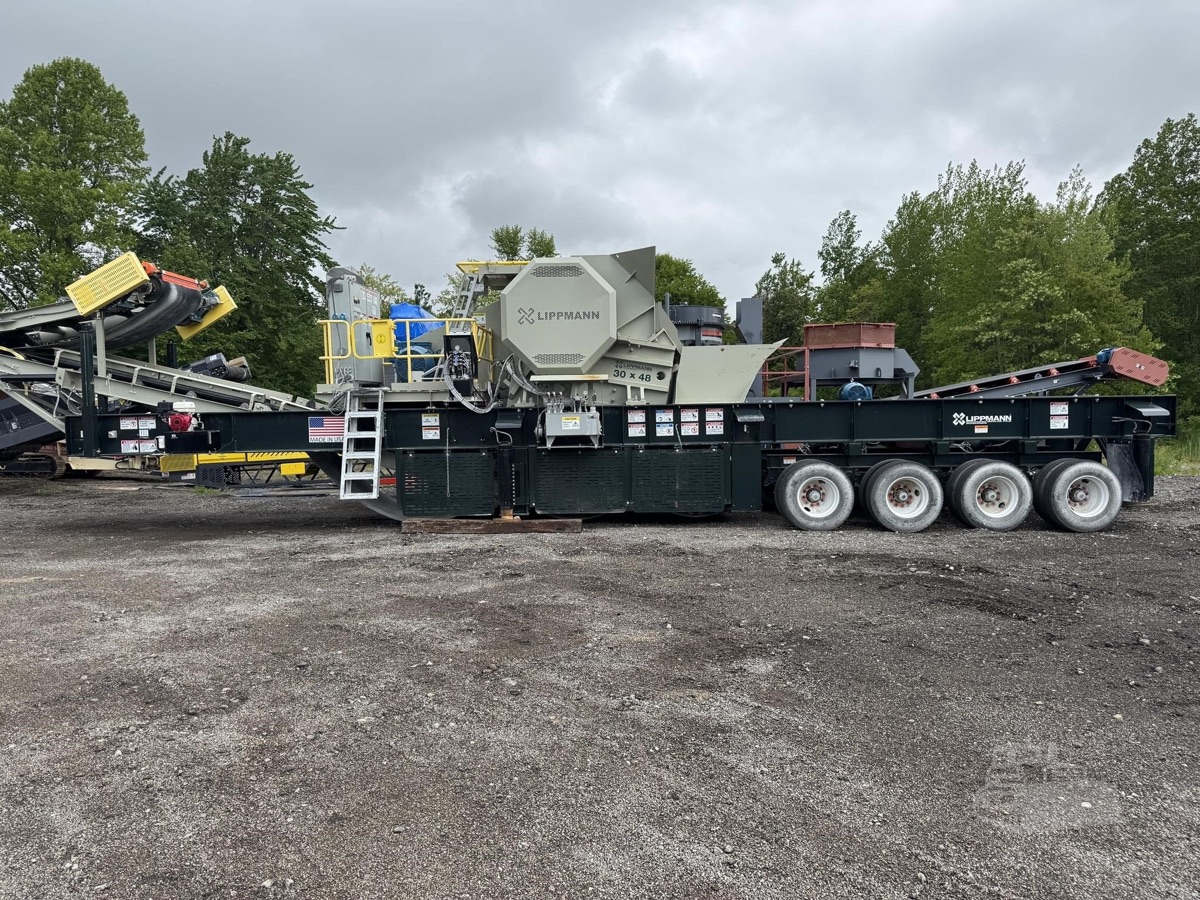
- Portable Plant — A complete crushing, screening, or processing system mounted on a wheeled chassis for transport between sites.
R-S
- Radial Stacker — A conveyor mounted on a pivot that rotates to create larger stockpiles. Reduces loader work significantly.
- RCA (Recycled Concrete Aggregate) — Aggregate produced by crushing waste concrete. Used as road base, fill, and drainage stone.
- Reduction Ratio — The ratio of feed size to product size. A jaw crusher with a 6:1 ratio reduces 24" feed to 4" product.
- Scalping Screen — A heavy-duty pre-screen that removes fines and oversize before the crusher.
- Screen Media — The panels installed on a screener's decks. Options include woven wire, polyurethane, rubber, and perforated plate.
- Spec Aggregate — Aggregate that meets specific gradation, shape, and quality requirements (DOT specs, ASTM standards).
T-W
- Tier 4 Final — Current EPA emission standard for diesel engines. Requires DPF and SCR aftertreatment systems with DEF.
- Toggle Plate — A sacrificial plate in a jaw crusher designed to break if uncrushable material enters the chamber.
- TPH (Tons Per Hour) — The standard measure of crusher and screener production capacity.
- Trommel — A rotating drum screen used for sizing material. Excels at screening wet and sticky material.
- Undercarriage — The track system on tracked equipment including shoes, chains, rollers, idlers, and sprockets.
- Wear Parts — Components that wear during normal operation and require periodic replacement. Jaw plates, blow bars, screen media, and mantles are examples.
Can't find a term? Contact our team — we're happy to explain any equipment terminology.