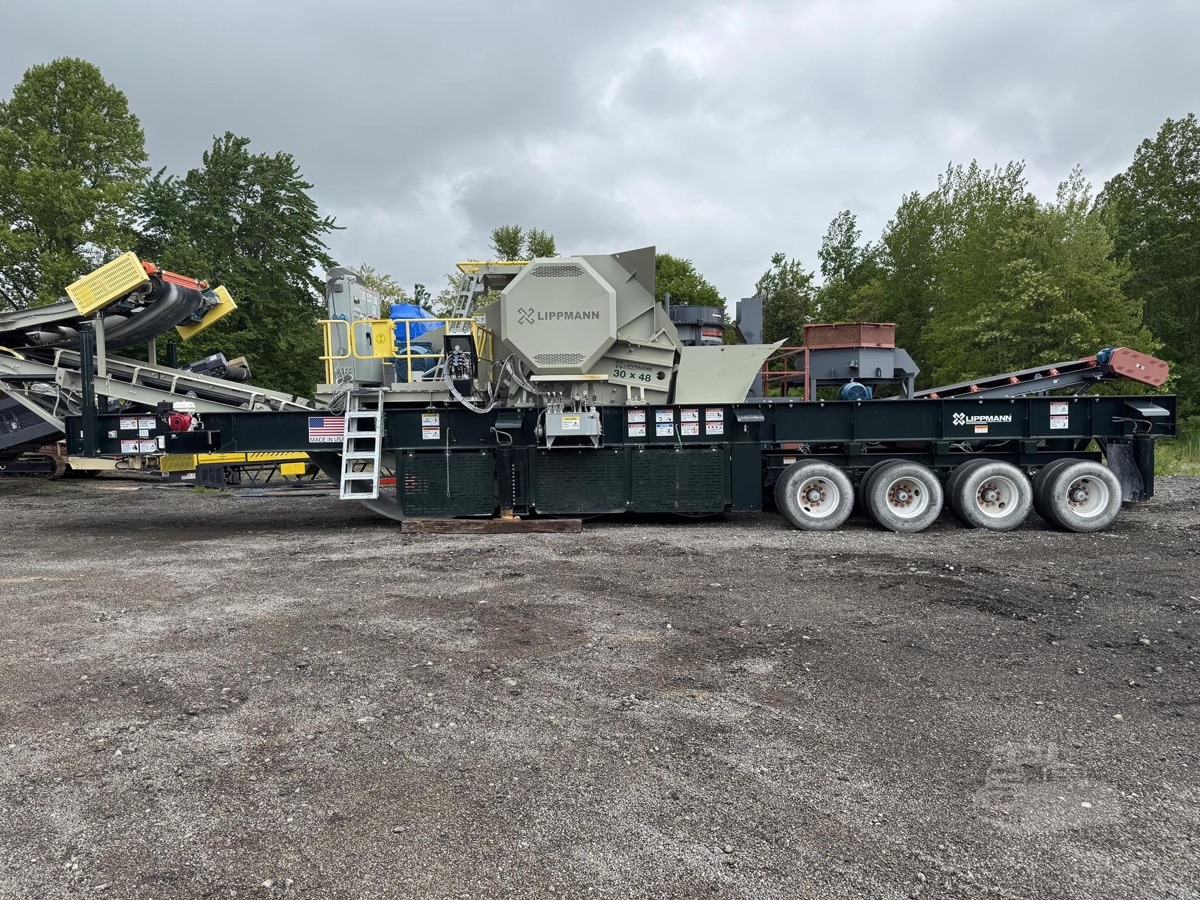
Three Crusher Types, Three Different Jobs
Not all crushers are interchangeable. Each type is engineered for a specific stage of the crushing process, and using the wrong crusher wastes fuel, produces poor product, and wears out components prematurely.
Quick Reference
| Feature | Jaw Crusher | Cone Crusher | Impact Crusher |
|---|---|---|---|
| Stage | Primary | Secondary / Tertiary | Primary or Secondary |
| Reduction ratio | 6:1 | 4:1 to 8:1 | 10:1 to 25:1 |
| Best material | Hard rock, blasted stone | Hard, abrasive rock | Soft to medium rock, concrete, asphalt |
| Product shape | Elongated/flat | Cubical (excellent) | Cubical (good) |
| Throughput | 100 – 600+ TPH | 50 – 500 TPH | 100 – 500 TPH |
| Wear cost | Low to moderate | Moderate to high | High (blow bars) |
| Price range (used) | $50,000 – $600,000 | $75,000 – $500,000 | $75,000 – $575,000 |
Jaw Crushers: The Primary Workhorse
A jaw crusher uses two plates — one fixed, one moving — to compress material. Think of it as a giant nutcracker. It's almost always the first machine in a crushing circuit because it accepts the largest feed size.
Use a jaw crusher when:
- You're processing blasted rock, boulders, or large concrete slabs
- You need to reduce material from 30"+ down to 4-6" for further processing
- You're crushing extremely hard, abrasive rock (granite, basalt, quartzite)
- You want the lowest cost per ton at the primary stage
Limitations: Jaw crushers produce a slab-shaped product. For spec aggregate that needs a cubical shape, you'll need a cone or impact crusher downstream.
Cone Crushers: The Shape Maker
A cone crusher uses a rotating mantle inside a concave bowl to squeeze and break material. It's designed for secondary and tertiary crushing — taking the jaw crusher's output and producing spec-grade aggregate.
Use a cone crusher when:
- You need to produce cubical aggregate that meets DOT or ASTM specifications
- You're processing hard, abrasive rock (granite, gneiss, trap rock)
- You need multiple product sizes from a single machine (adjust CSS for different products)
- Wear cost per ton matters — cones are more economical than impacts on hard rock
Limitations: Cone crushers don't accept large feed — maximum feed size is typically 8-12 inches. They need a primary crusher upstream. They're also more expensive to purchase and maintain than jaw crushers.
Impact Crushers: The Recycling Champion
Impact crushers use rapidly spinning rotors with blow bars to throw material against stationary anvils or curtains. The impact shatters the material rather than compressing it.
Use an impact crusher when:
- You're recycling concrete or asphalt (impacts liberate rebar and produce clean aggregate)
- You're processing limestone or other soft to medium-hard rock
- You need high reduction ratio in a single pass (skip the secondary crusher)
- Product shape is important but material isn't extremely hard
Limitations: Blow bars wear quickly on hard, abrasive material — processing granite through an impact crusher can cost 3-5x more in wear parts than a jaw+cone circuit. Impact crushers also generate more fines than some applications want.
Common Crushing Circuits
Circuit 1: Jaw + Screener (Basic)
The simplest and most common setup for contract crushing. A jaw crusher produces 3/4" minus to 4" minus material, and a screener separates it into products. Good for base material, fill, and recycled aggregate.
Circuit 2: Jaw + Cone + Screener (Spec Aggregate)
For producing DOT-spec aggregate. The jaw does primary reduction, the cone shapes the product, and the screener classifies. Produces premium cubical stone in multiple sizes.
Circuit 3: Impact + Screener (Recycling)
Ideal for concrete and asphalt recycling. The impact crusher handles primary reduction and rebar liberation in one pass. Magnetic separator removes steel. Screener classifies the recycled aggregate.
Circuit 4: Jaw + Impact + Screener (Maximum Flexibility)
Some operations pair a jaw crusher with an impact crusher for maximum versatility. The jaw handles hard rock, the impact handles recycling, and both feed the screener.
Find Your Crusher
We carry jaw, cone, and impact crushers from all major manufacturers. Browse all crushers or contact us for help choosing the right machine for your operation.